The A-PLUS Debate: Could Auctions and Packers Coexist?
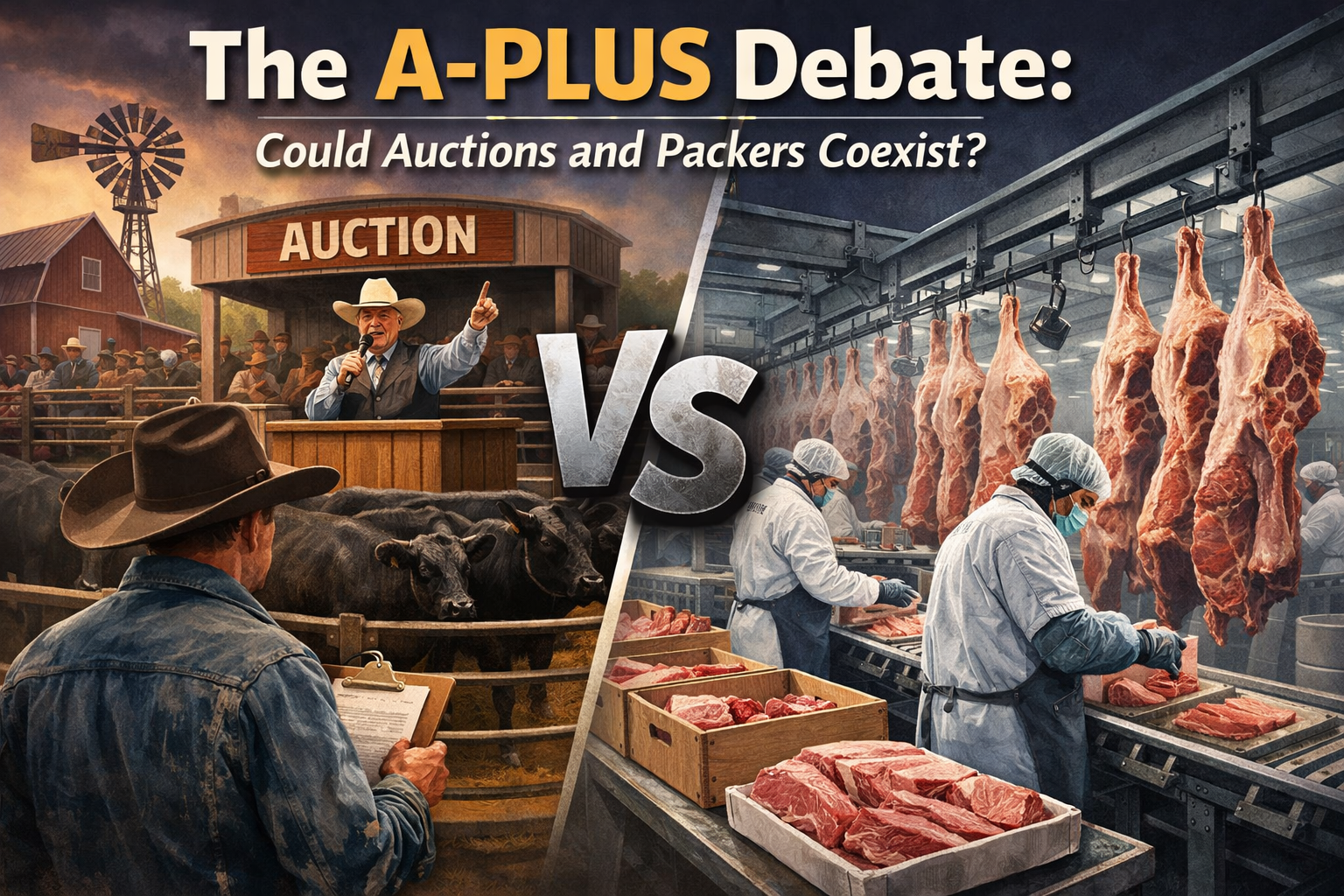
In earlier posts, I discussed a proposal in the House Agriculture Committee’s version of the 2026 Farm Bill that could modify a long-standing Packers and Stockyards Act regulation separating livestock auctions from meatpackers. I also examined the historical reasons behind that separation, which dates back more than a century to concerns about market power and conflicts of interest in livestock marketing.
The proposal—known as A-PLUS (Amplifying Processing of Livestock in the United States)—would allow livestock auctions to participate in the ownership or operation of certain smaller packing plants.
Supporters believe this could strengthen regional processing capacity. Critics worry it could undermine the market safeguards that the Packers and Stockyards Act was designed to protect.
Understanding this debate requires looking at both sides of the issue.
Why Some Support the A-PLUS Proposal
Advocates of the proposal argue that livestock producers would benefit from greater processing capacity and more marketing options.
Over the past several decades, the U.S. meatpacking industry has become increasingly concentrated. A relatively small number of very large companies process a substantial share of the nation’s livestock.
This concentration has raised concerns among producers and policymakers about:
limited slaughter capacity in some regions
transportation costs associated with moving livestock long distances
reduced marketing options for producers
Supporters of the A-PLUS proposal believe that allowing livestock auctions to invest in or participate in smaller packing plants could help address these concerns.
Livestock auctions are already central gathering points for cattle and hogs in many regions. In theory, allowing those businesses to participate in local packing operations could encourage the development of additional regional processing facilities, potentially creating more competition for livestock.
From this perspective, the proposal could serve as a tool to strengthen rural infrastructure and expand market opportunities.
Why Others Are Concerned
Opponents of the proposal point to the same structural concerns that led to federal regulation of the livestock industry in the first place.
Livestock auctions operate as market agencies selling on commission under the Packers and Stockyards Act. Their role is to act on behalf of livestock sellers, typically earning a commission based on the sale price of animals.
Packers, on the other hand, are buyers whose economic interest is to purchase livestock at the lowest price consistent with their processing needs.
Historically, policymakers believed that combining those roles within a single business structure could create conflicts of interest.
If an auction operator had a financial interest in a packing plant, critics argue that the operator might face competing incentives: obtaining the highest price for livestock sellers while also ensuring a steady supply of cattle or hogs for the affiliated packing operation.
Even with disclosure requirements, some industry participants worry that such arrangements could affect price discovery and market transparency within livestock auctions.
Structural Safeguards in the Proposal
The A-PLUS proposal attempts to address some of these concerns by limiting the scope of the rule change.
The proposal would only allow livestock auctions to participate in smaller packing operations, defined by slaughter capacity thresholds. The largest packing companies in the industry would remain subject to the existing prohibition.
In addition, auctions with ownership interests in packing plants would be required to disclose those relationships to livestock sellers.
Supporters believe these safeguards would allow new investment in processing capacity while still maintaining transparency within livestock markets.
Whether these measures would fully address conflict-of-interest concerns remains part of the ongoing policy debate.
Compliance and Regulatory Questions
If the proposal ultimately becomes law, it would likely raise a number of compliance and regulatory questions for industry participants.
For example:
How would disclosure requirements be implemented and enforced?
What safeguards would be necessary to maintain fair auction practices when ownership relationships exist?
How would regulators evaluate potential conflicts of interest between market agencies and packing operations?
Because livestock auctions are regulated entities under the Packers and Stockyards Act, any structural change affecting their relationships with packers would likely receive close attention from regulators.
Market agencies considering participation in packing operations would need to carefully evaluate both the legal requirements and the operational implications of such arrangements.
A Continuing Policy Question
The debate surrounding the A-PLUS proposal reflects a broader challenge in agricultural policy: balancing the goal of expanding processing capacity with the need to preserve fair and competitive livestock markets.
For more than a century, policymakers have struggled with how to structure livestock markets in ways that encourage investment and innovation while also preventing conflicts of interest and market manipulation.
Whether the A-PLUS proposal ultimately becomes law remains uncertain. But the discussion surrounding it highlights an enduring question in livestock policy: how much integration between buyers and sellers can livestock markets sustain without undermining market transparency and competition?
As Congress continues to debate the next Farm Bill, this issue will likely remain an important topic for producers, market operators, and policymakers alike.
Final Thoughts
For participants in the livestock industry, the outcome of this debate could shape how livestock markets operate in the years ahead.
While the policy discussion continues in Washington, the underlying questions—about market structure, competition, and transparency—are ones that have shaped livestock regulation for more than a century.
Understanding that history can help industry participants navigate the changes that may lie ahead.
